
The 2026 World Cup spans 16 host cities across three countries, from the arid highlands of Mexico to the humid Gulf Coast, from the Pacific Northwest to the Canadian east coast. Weather conditions vary dramatically between venues, and what you pack for Miami is very different from what you need for Seattle. Here's your complete city-by-city weather guide for the tournament window of June 11 — July 19.
USA — East Coast
New York / New Jersey (MetLife Stadium)
Temperature: 75-90°F (24-32°C) Humidity: Moderate to high (60-80%) Rain: Occasional thunderstorms, especially late afternoon Stadium: Open-air, no roof
New York in July is hot and humid. MetLife Stadium offers minimal shade — sections on the west side get afternoon sun until late. Sunscreen and a hat are essential. Thunderstorms can roll in quickly; bring a clear poncho in your bag. Evening matches are more comfortable, with temperatures dropping to the low 70s after sunset.
Pack: Light breathable clothing, sunscreen SPF 50, sunglasses, rain poncho, comfortable walking shoes.
Boston / Foxborough (Gillette Stadium)
Temperature: 70-85°F (21-29°C) Humidity: Moderate (55-70%) Rain: Occasional showers Stadium: Open-air, no roof
Slightly cooler than New York with less humidity. Foxborough is 30 miles southwest of Boston, so weather can differ slightly from the city. Evenings are pleasant. The drive or train to Gillette can be exposed — wear sun protection while queuing.
Pack: Layers for evening matches, sunscreen, rain jacket.
Philadelphia (Lincoln Financial Field)
Temperature: 78-92°F (26-33°C) Humidity: High (65-80%) Rain: Thunderstorm risk, especially July Stadium: Open-air, no roof
Philadelphia in July rivals Houston for uncomfortable humidity. The concrete around the stadium complex radiates heat. Hydrate aggressively. The city itself is walkable but hot — duck into air-conditioned museums (the art museum, please) between activities.
Pack: Maximum sun protection, moisture-wicking clothing, refillable water bottle.
Miami (Hard Rock Stadium)
Temperature: 82-92°F (28-33°C) Humidity: Very high (75-90%) Rain: Daily afternoon thunderstorms (it's the wet season) Stadium: Partial roof/canopy provides some shade
Miami in June-July is brutally hot and wet. Expect daily thunderstorms, usually between 2-5 PM. Morning sunshine gives way to towering cumulus clouds by midday. The humidity is oppressive for visitors from drier climates. Hard Rock Stadium's canopy roof provides shade for some upper deck seats but lower bowl sections are exposed.
Warning: Heat exhaustion is a real risk. Drink water constantly. If you feel dizzy or stop sweating, seek medical attention immediately.
Pack: Light colours, moisture-wicking everything, SPF 50, compact umbrella/poncho, electrolyte packets.
Atlanta (Mercedes-Benz Stadium)
Temperature: 80-92°F (27-33°C) Humidity: High (65-80%) Rain: Thunderstorm risk Stadium: Retractable roof — likely closed for temperature control
Great news: Mercedes-Benz Stadium has a retractable roof and air conditioning. FIFA may choose to close the roof during afternoon matches, making this one of the most comfortable venues weather-wise. Outside the stadium, Atlanta is hot and humid.
Pack: Stadium will be climate-controlled; pack for the city heat outside.
USA — Central
Houston (NRG Stadium)
Temperature: 85-98°F (29-37°C) Humidity: Extreme (80-95%) Rain: Thunderstorms common Stadium: Retractable roof — will almost certainly be closed
Houston in July is among the most extreme weather conditions of any host city. Outside temperatures routinely hit 95°F+ with suffocating humidity. The good news: NRG Stadium has a retractable roof and will be fully air-conditioned. Walking between your car/transit and the stadium is the main exposure.
Pack: Stay in air conditioning as much as possible. When outside: light clothing, hat, sunscreen, water everywhere.
Dallas (AT&T Stadium)
Temperature: 85-100°F (29-38°C) Humidity: Moderate (50-65%) Rain: Low probability Stadium: Retractable roof — likely closed
Dallas in summer is scorching but drier than Houston. AT&T Stadium's roof will almost certainly be closed with A/C running. The surrounding Arlington area is car-dependent, so you'll be going from air-conditioned building to air-conditioned car to air-conditioned stadium.
Pack: Sun protection for outdoor fan zone activities; the stadium itself will be comfortable.
Kansas City (Arrowhead Stadium)
Temperature: 80-95°F (27-35°C) Humidity: Moderate to high (55-75%) Rain: Thunderstorm risk Stadium: Open-air, no roof
Kansas City summers are warm with risk of severe weather. Thunderstorms can produce large hail and high winds — the Midwest storm season overlaps with the World Cup. Arrowhead Stadium is fully open-air, so weather is a factor. Tailgating culture is massive here; expect fans to set up 4-5 hours early with grills and canopies.
Pack: Sunscreen, rain gear, layers for evening temperature drops.
USA — West Coast
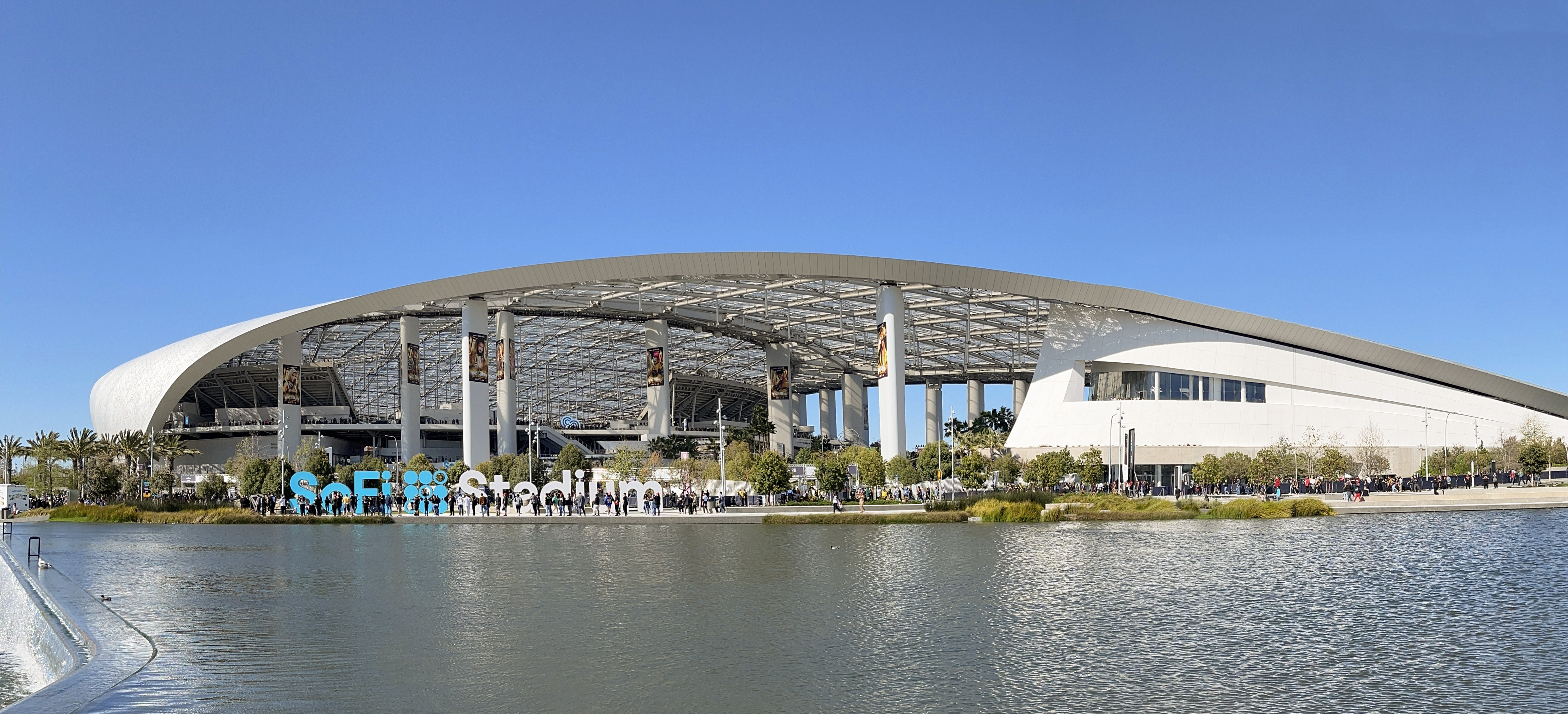
Los Angeles (SoFi Stadium)
Temperature: 72-85°F (22-29°C) Humidity: Low (30-50%) Rain: Almost zero probability Stadium: Semi-enclosed with translucent roof
LA weather in June-July is close to perfect. Warm, dry, sunny, with coastal fog (June Gloom) occasionally keeping mornings overcast. SoFi Stadium has a translucent roof that allows airflow while providing shade. One of the most comfortable venue experiences.
Pack: Light layers for cool evenings, sunscreen, sunglasses.
San Francisco / Bay Area (Levi's Stadium, Santa Clara)
Temperature: 65-80°F (18-27°C) Humidity: Low to moderate Rain: Very rare in summer Stadium: Open-air, no roof
Levi's Stadium is in Santa Clara, not San Francisco. Santa Clara is warmer than SF — temperatures can reach 85°F on hot days while San Francisco sits at 65°F with fog. The temperature difference is dramatic. If you're staying in SF and commuting to matches, bring a jacket for the city and summer clothes for the stadium.
Pack: Layers (essential in the Bay Area), sunscreen for the stadium.
Seattle (Lumen Field)
Temperature: 65-78°F (18-26°C) Humidity: Low to moderate (50-65%) Rain: Light drizzle possible (but summer is Seattle's dry season) Stadium: Open-air with partial cover
Contrary to reputation, Seattle in summer is beautiful. June-July are the driest months, with long daylight hours (sunset after 9 PM) and comfortable temperatures. Lumen Field's partial roof covers some upper sections. This may be the most pleasant weather of any host city.
Pack: Light layers, a light jacket for evenings, sunscreen.
Canada
Toronto (BMO Field / potential expanded venue)
Temperature: 70-82°F (21-28°C) Humidity: Moderate (55-70%) Rain: Occasional thunderstorms Stadium: Open-air
Toronto summers are warm and pleasant with occasional hot spells. Lake Ontario moderates temperatures. Thunderstorms are possible but not daily. Evening matches will be comfortable. The city is highly walkable in summer.
Pack: Light clothing, rain layer, sunscreen.
Vancouver (BC Place)
Temperature: 62-75°F (17-24°C) Humidity: Low to moderate Rain: Light rain possible Stadium: Retractable roof
Vancouver has the mildest weather of any host city. Warm days, cool evenings, stunning mountain and ocean scenery. BC Place has a retractable roof for weather protection. The most consistently comfortable city for outdoor activities.
Pack: Layers, light jacket, enjoy the most temperate World Cup city.
Mexico
Mexico City (Estadio Azteca)
Temperature: 64-78°F (18-26°C) Humidity: Moderate Rain: Daily afternoon thunderstorms (rainy season) Altitude: 2,240m — UV is intense
Mexico City's weather is milder than you'd expect. Mornings are cool and sunny; afternoons bring predictable thunderstorms that usually pass within an hour. The altitude means UV radiation is 25% stronger — burn risk is high even on cloudy days. Nights are cool, sometimes requiring a light jacket.
Pack: Rain poncho, sunscreen SPF 50, layers for evening, see our altitude guide.
Guadalajara (Estadio Akron)
Temperature: 70-85°F (21-29°C) Humidity: Moderate to high Rain: Afternoon thunderstorms (rainy season) Stadium: Open-air with partial canopy
Similar to Mexico City but warmer and at lower altitude (1,566m). Afternoon rain is common. The stadium's distinctive canopy provides some shade. Guadalajara is a beautiful city with less tourist infrastructure than Mexico City.
Pack: Rain gear, sunscreen, comfortable walking shoes.
Monterrey (Estadio BBVA)
Temperature: 82-100°F (28-38°C) Humidity: Moderate (50-65%) Rain: Low to moderate Stadium: Open-air
Monterrey is the hottest of the three Mexican host cities. June-July temperatures regularly exceed 95°F with strong sun. The city is at lower altitude (540m) so the heat hits differently than Mexico City's mild temperatures. Hydration is critical.
Pack: Maximum sun protection, light clothing, electrolyte supplements, hat.
Universal packing list
Regardless of which city you're visiting:
- Sunscreen SPF 50 (reapply every 2 hours)
- Refillable water bottle
- Comfortable walking shoes (you'll walk 10-15km on match days)
- Compact rain poncho or packable rain jacket
- Portable phone charger
- Your team's jersey in a breathable fabric
- Small clear bag (for stadium entry)